
How PLOS + LES Work Together
Plant Leadership Operating System (PLOS) + Leadership Execution System (LES)
A leadership execution system built for manufacturing operations—not a traditional training program.
Most manufacturing organizations do not struggle because leaders lack training.
They struggle because:
Leadership expectations are inconsistent
Coaching is uneven
Behaviors do not hold under pressure
PLOS-LES solves that problem by creating:
A clear leadership operating system
A structured execution rhythm
Reinforced daily execution
PLOS defines the standard → LES creates the execution
Together, they create more consistent leadership execution across the operation.
Two Systems. One Operating Model.
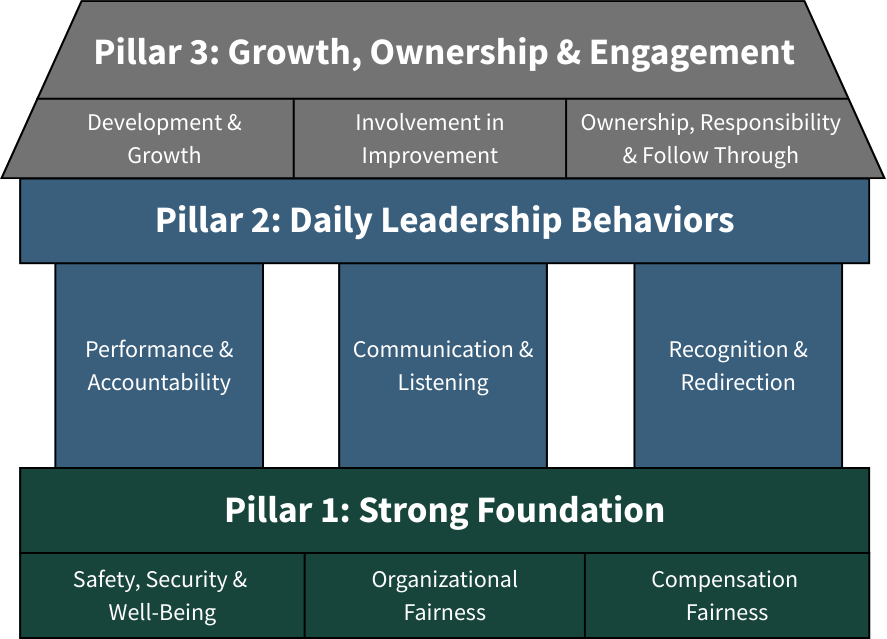
Plant Leadership Operating System
PLOS
Defines the leadership standards required for consistent operational performance.
It establishes the leadership standards, expectations, and behaviors required for consistent plant performance.
This includes:
Safety, Security & Well-Being
Organizational Fairness
Communication & Listening
Performance & Accountability
Recognition & Redirection
Compensation Fairness
Development & Growth
Involvement for Improvement
Ownership & Follow-Through
PLOS answers: What should leaders consistently do?
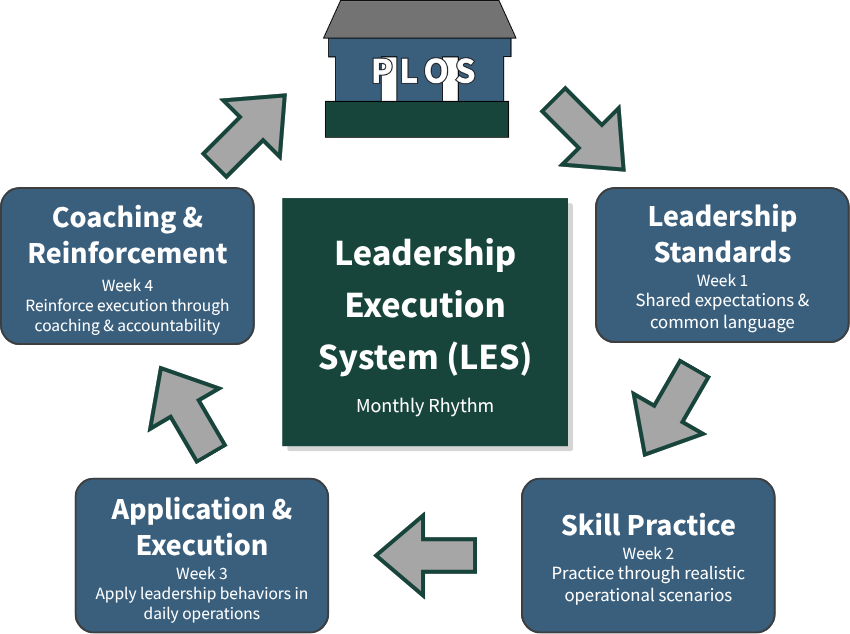
Leadership Execution System
LES
Turns leadership standards into consistent daily execution.
It creates the structured monthly rhythm that drives:
leadership practice
application
coaching
accountability
reinforcement
LES answers: How do leadership standards become consistent daily execution?
Every Module Follows the Same Leadership Execution Rhythm
Leadership consistency does not happen through one-time training events.
It happens through repetition, application, coaching, accountability, and reinforcement over time.
Every LES module follows a consistent monthly execution cycle.
Week 1 — Leadership Standards
Shared standards and expectations
Leaders align around the operational leadership standards expected across the site.
Week 2 — Skill Practice
Practice through realistic operational scenarios
Leaders practice consistent responses, coaching, communication, and accountability through realistic manufacturing situations.
Week 3 — Application & Execution
Apply leadership standards in daily operations
Leaders apply one observable leadership behavior directly within daily operational execution.
Week 4 — Coaching & Reinforcement
Coaching, accountability, and reinforcement
Managers reinforce execution consistency through coaching, accountability, and operational follow-through.
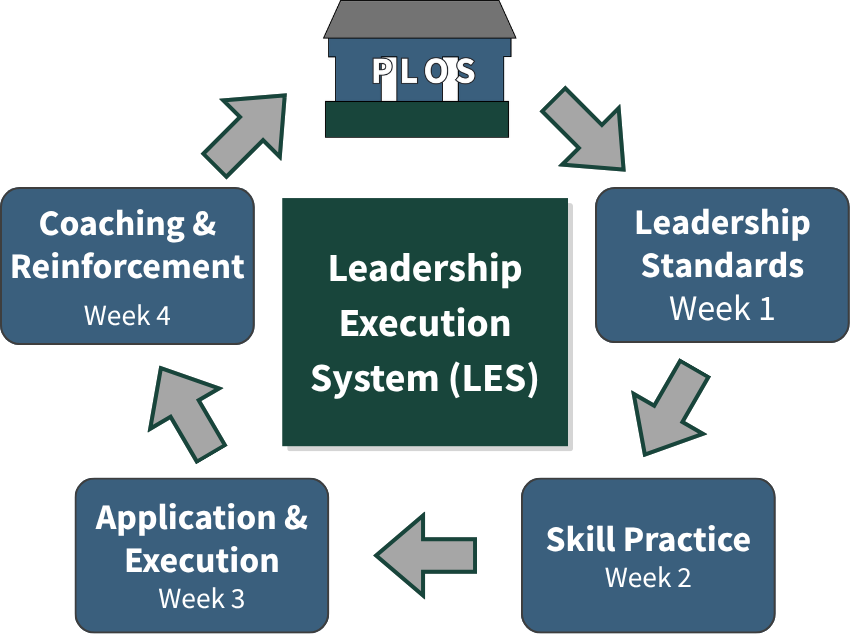
This is how leadership standards become daily execution.
Leadership Execution Should Be Tied to a Real Operational Problem
Before implementation begins, ZMC works with plant leadership and HR to identify where leadership inconsistency is limiting operational performance.
That may include:
Safety
Quality
Delivery
Cost
Growth
Leadership consistency across shifts or departments
PLOS-LES is implemented against those operational needs — not delivered as a generic leadership training program.
The goal is not participation.
The goal is measurable operational improvement through more consistent leadership execution over time.
ZMC provides the leadership system, implementation structure, and operational guidance.
The client owns execution inside daily operations.
The leadership system itself remains consistent across implementations.
What changes is how the system is applied against the site’s operational priorities, leadership gaps, and reinforcement needs.
The goal is not cosmetic customization. The goal is operational improvement through more consistent leadership execution.
How Execution Happens Across the Full Leadership System
Most leadership programs focus primarily on supervisors.
PLOS-LES works because supervisors, managers, support function managers, and plant leadership each have a defined role in execution.
That creates aligned leadership expectations across the operation instead of inconsistent leadership by level, shift, or department.
Supervisors
→ Execute Daily Leadership
Real-time coaching
Standards reinforcement
Follow-up
Real-time coaching and correction
Daily execution
Managers
→ Coach the Coaches
Observe supervisors
Drive consistency
Remove barriers
Strengthen accountability
Support Function Managers
→ Align Functional Execution
Manage handoffs
Clarify ownership
Remove support barriers
Reinforce follow-through
Plant Leadership
→ Own the System
Set priorities
Maintain alignment
Enforce consistency
Govern execution
One system.
Four leadership roles.
Site-wide consistency.
The system is designed to operate within normal manufacturing rhythms—not outside of them.
Leaders apply the system through daily operations, coaching, reinforcement, and execution rather than large off-site training events or excessive administrative work.
Implementation pacing is based on the site’s operational needs, leadership readiness, and reinforcement requirements.
After implementation, organizations can continue reinforcing the system through ongoing sustainment support, refreshed content, and onboarding for new leaders.
Built Into Daily Operations—Not Added On
30 minutes per week
Weekly 30-minute execution sessions, supported by daily application, manager coaching, and monthly governance.
Integrated into existing leadership routines
Embedded into normal operational leadership rhythms
Anchored to a real operational problem
Focused on recurring operational performance gaps (SQDCG)
Operational performance improves when leadership execution becomes consistent.
Behavior Change Requires Reinforcement—Not Events

Most leadership programs stop at awareness.
Few create consistent leadership execution over time.
PLOS-LES is designed around reinforcement:
Manager coaching built into normal operations
Peer learning groups designed for honest supervisor discussion
Observable development actions tied to daily operations
Repeated leadership expectations across months
Leadership accountability that sustains execution
The goal is not participation.
The goal is consistency.
Let’s Identify Where Leadership Inconsistency Is Limiting Performance
Most operational performance problems are not caused by effort.
When performance depends too heavily on individual leaders, standards vary by shift, or improvements fail to sustain, the issue is usually not capability—it is leadership system consistency.
That is where PLOS-LES begins.